
Photo: EpiLink / Neurone

Better data sharing between patients and healthcare professionals can improve epilepsy treatment.
For people living with epilepsy, accurate information about seizures can be crucial in finding the right treatment. Yet many consultations today are still based on patients’ memory and handwritten notes. Startup company Neurone aims to change that with the EpiLink app.
When doctors assess the effectiveness of medication or adjust a treatment plan, patients’ own experiences are an important part of the decision-making process. However, for many patients it is difficult to keep track of when seizures occur, how severe they were, and how they develop from one episode to the next. This is a challenge that Jakob Junker Jeppesen knows all too well. At the age of 16, he was diagnosed with epilepsy and had to document his seizures using scraps of paper and memory.
“It was a frightening wake-up call to realise how unstructured my seizure tracking was. Not only was it difficult to describe and compare seizures from one episode to another, but the risk of errors was also high. That experience gave me the vision of creating a modern digital solution for both patients and doctors,” says Jakob Junker Jeppesen, founder of Neurone.
More structure supports better decisions
Through Neurone, he has developed EpiLink, a digital epilepsy diary that enables patients and caregivers to quickly register seizures directly from their mobile phones and then share their data with healthcare professionals via PDF export. The purpose is to provide a more accurate foundation for treatment decisions while also giving patients and caregivers a better overview of daily life and greater insight into the progression of their condition.
“We have used digitalisation to create a simple and user-friendly solution that supports a seamless treatment pathway. It is an app where patients and caregivers can register seizures in seconds, giving neurologists a better-informed basis for making treatment decisions,” says Jakob Junker Jeppesen.
 Photo: EpiLink / Neurone
EpiLink was developed through close collaboration with both patients and clinical experts.
The goal is to create:
-
More structured data
-
More focused consultations
-
Faster medication adjustments
-
Better collaboration between patients and healthcare professionals
A clinical need with significant potential
The need for better patient data is also recognised within the healthcare system. At epilepsy clinics, valuable consultation time is often spent reconstructing patients’ seizure histories, making it more difficult to make the best possible treatment decisions.
Neurone designed and developed EpiLink with support from Odense University Hospital (OUH).
Video: EpiLink / Neurone
“In our daily work at the Epilepsy Clinic, we highly value structured data so that we can provide the best possible treatment. New solutions and apps that help our patients compile their own observations before a consultation are very welcome. They give us a much stronger basis for decision-making and provide greater reassurance for both doctors and patients,” says Christoph Beier, Chief Physician at the Epilepsy Clinic at Odense University Hospital.
Neurone sees potential that goes beyond epilepsy. According to the company, the data model behind EpiLink can also be applied to a range of other neurological disorders where patients’ own observations play a central role in the treatment process.
Major Progress Through Lighthouse Life Science
Neurone has received funding from the Lighthouse Life Science project within Danish Life Science Cluster, which has played an important role in the company’s development and in gaining access to the healthcare sector.
“When we founded Neurone, Lighthouse Life Science provided us with a strong foundation and the right tools. They understand the startup environment and provided us with mentoring, financial support, and valuable connections. This gave us the credibility we needed and helped establish a strong collaboration with Zealand University Hospital,” says Jakob Junker Jeppesen.
The collaboration has helped open doors to hospitals and healthcare stakeholders in both Denmark and Norway, and today Neurone is in discussions with 12 hospitals in Denmark and four in Norway.
For Neurone, the next step is to make patient-generated data a natural part of neurological care, both within and beyond Denmark’s borders.
“Our ambition is clear: to build the digital infrastructure for managing neurological diseases and help healthcare professionals focus on what matters most, the patient,”
concludes Jakob Junker Jeppesen, founder of Neurone
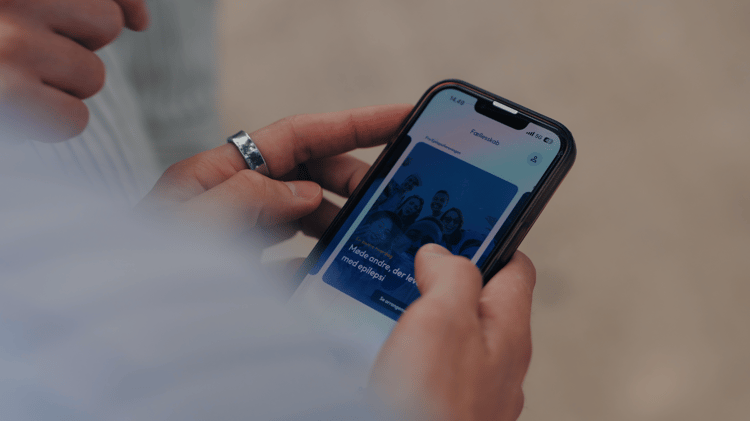 Photo: EpiLink / Neurone
This project is co-funded by the European Union and facilitated by Danish Life Science Cluster.
